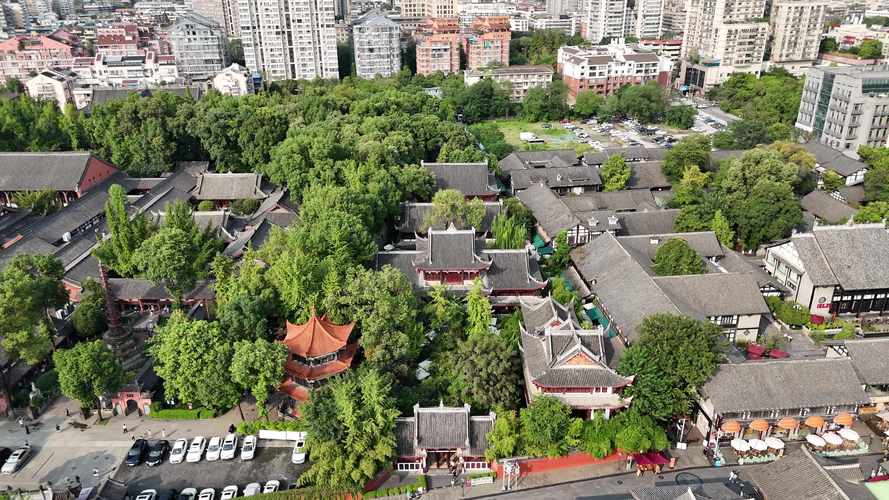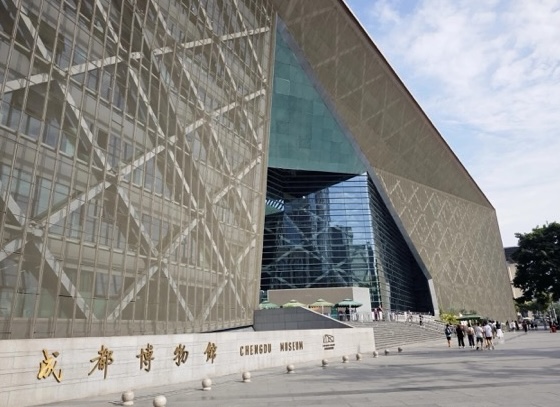
The Chengdu Museum building on the west side of Tianfu Square
Home Destinations Travel Guides Booking Services About Us

Chengdu Museum (成都博物馆)

Ten treasures from the ancient Shu kingdom to the Han dynasty — the stone rhino, the acupuncture figure and the laughing storyteller

Chengdu Museum Guide

If you need car charter or ticket booking services, please click Booking Page

Chengdu Museum Overview

Ten objects, one free building beside Tianfu Square — the best three hours in Chengdu when it rains.

The Chengdu Museum (成都博物馆) is the city’s own collection rather than a national one, and it tells the story of the Chengdu plain from the ancient Shu kingdom to the Qing dynasty. Entry is free, the building sits on the west side of Tianfu Square, and the headline pieces are good enough to justify a half-day rather than the usual forty-minute walk-through.

Most visitors see one or two famous objects and leave. The ten below are what make a proper route: an 8.5-tonne stone rhino, the world’s oldest acupuncture model, a Han-dynasty comedian, and four miniature looms that rewrote the history of Chinese silk. Go on a weekday morning, start on the top floor and walk down.

10
Must-See Pieces
Free
Admission, Book Ahead
2-3 h
For the Ten Treasures
Chengdu Museum on Tianfu Square, Chengdu
Qingyang District
9:00 - 17:00
Free entry
2 - 3 hours

The Ten Treasures, One by One

All ten sit in the permanent galleries, spread over several floors — treat the visit as a treasure hunt and start at the top. Tap any photo to enlarge it.

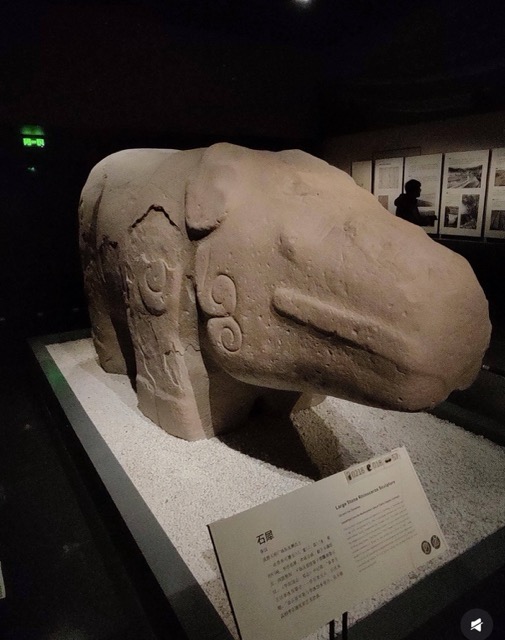
Stone Rhinoceros 石犀 at the Chengdu Museum
Stone Rhinoceros (石犀)
Qin – Han

An 8.5-tonne “river-quelling beast” carved from a single block of red sandstone, tied to Li Bing’s work on the Chengdu rivers. Locals call it Mendun’er (闷墩儿) — the chubby one — and it is the largest Qin-Han round sculpture found in southwest China.
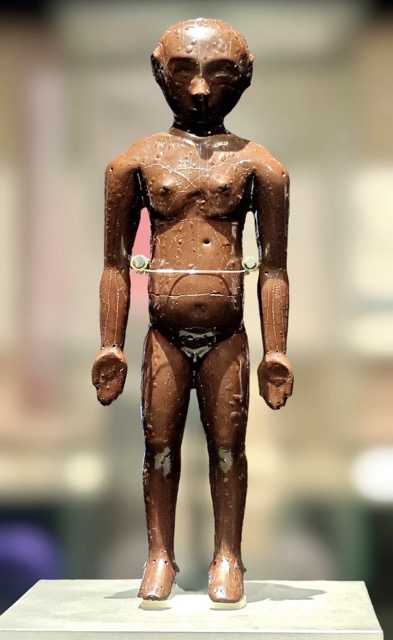
Lacquered Acupuncture Figure 经穴髹漆人像 at the Chengdu Museum
Lacquered Acupuncture Figure (经穴髹漆人像)
Western Han

The earliest and most complete acupuncture model in the world, with meridians and points drawn over the whole body. It is small, so lean in — the value is in the fine lines, not the size.

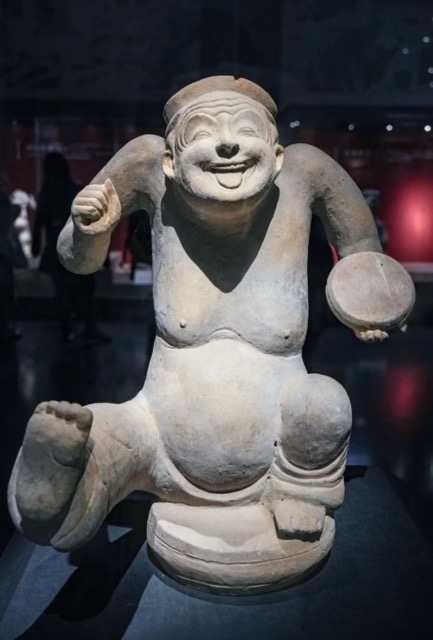
Pottery Entertainer 东汉陶俳优俑 at the Chengdu Museum
Pottery Entertainer (东汉陶俳优俑)
Eastern Han

The “drumming storyteller” everyone photographs: chest bare, belly out, mouth wide open, drumstick in hand. Two thousand years old and still the funniest face in the building.

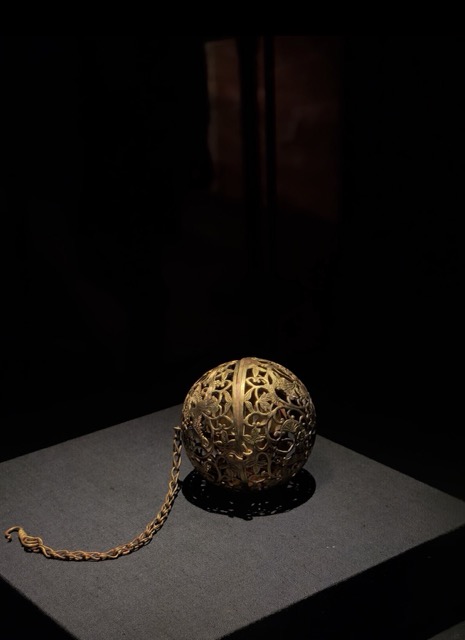
Gilded Silver Openwork Sachet 唐代镂空鎏金香囊 at the Chengdu Museum
Gilded Silver Openwork Sachet (唐代镂空鎏金香囊)
Tang

Ancient engineering: a hollow gilt sphere with a gimbal ring inside, so the incense bowl stays level however the sachet swings. Nothing spills, and the silver work is as fine as lace.

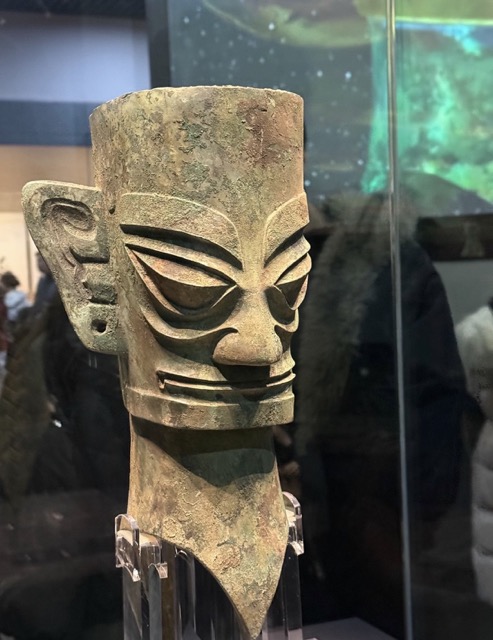
Sanxingdui Bronze Head 三星堆青铜头像 at the Chengdu Museum
Sanxingdui Bronze Head (三星堆青铜头像)
Late Shang

A face from the Sanxingdui site — almond eyes, huge ears, a thin smile. It is one of the ancient Shu civilisation’s signature pieces, and the casting shows late Shang bronze work at its peak.

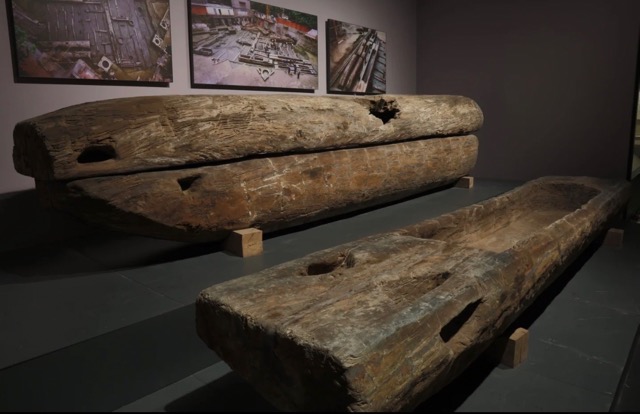
Boat Coffin 战国船棺 at the Chengdu Museum
Boat Coffin (战国船棺)
Warring States

A burial cut from one whole nanmu log, long enough to hold a boat-shaped chamber. It is the clearest evidence of the Shu boat-coffin custom, and of how the ancients pictured the journey after death.

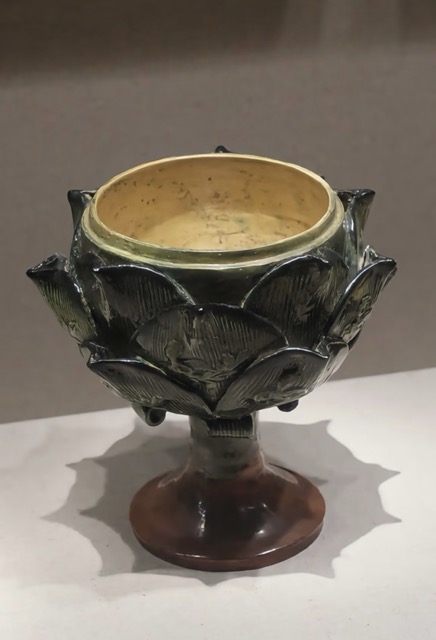
Qiong Kiln High-Footed Censer 邛窑高足瓷炉 at the Chengdu Museum
Qiong Kiln High-Footed Censer (邛窑高足瓷炉)
Late Tang – Five Dynasties

The high point of Sichuan’s own Qiong kiln: a lotus-shaped body in green glaze, with lotus petals and flying apsaras incised around it. Late Tang and Five Dynasties ceramics rarely look this confident.

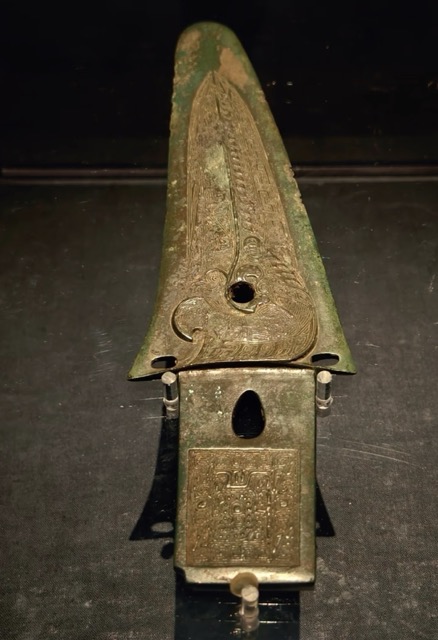
Bronze Ge with Silkworm Pattern 蚕纹铜戈 at the Chengdu Museum
Bronze Ge with Silkworm Pattern (蚕纹铜戈)
Warring States

A weapon engraved with silkworms — a strange, precise link between Shu’s armies and the silk trade that made the plain rich. One of the small pieces that explain how this culture thought.

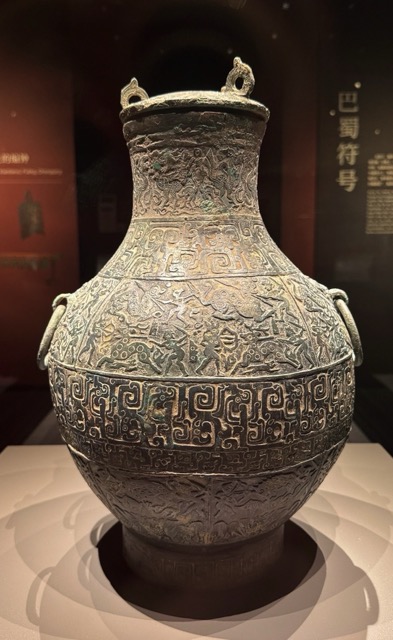
Bronze Hu with Hunting Scene 狩猎纹铜壶 at the Chengdu Museum
Bronze Hu with Hunting Scene (狩猎纹铜壶)
Warring States

The whole body is inlaid in gold and silver with a hunting scene: running animals, archers, a chase that never stops. It reads like a bronze painting rather than a vessel.

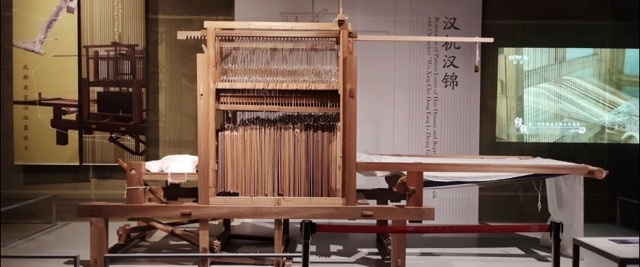
Laoguanshan Loom Models 老官山汉墓织机模型 at the Chengdu Museum
Laoguanshan Loom Models (老官山汉墓织机模型)
Western Han

Four miniature Shu-brocade looms from the Laoguanshan tombs, complete enough to reconstruct how Han weavers worked. They prove how advanced Chengdu’s silk industry was, and fill a gap in China’s textile history.

Detailed Information

Location

No. 1 Xiaohe Street, Qingyang District, Chengdu — west side of Tianfu Square

Opening Hours
  • Tuesday to Sunday, 9:00 - 17:00
  • Last entry around 16:30 — the halls start closing after that
  • Closed on Mondays except public holidays
Best Time to Visit

Weekday morning, right at opening — the stone rhino is the first thing everyone queues for

Allow 2-3 hours for the ten pieces; half a day if you read the labels

Tickets & Prices

Permanent exhibitions are free

Temporary ticketed shows cost extra, usually ¥50-¥100

Reservation Information
  • Free, but book a slot on the museum’s official WeChat account first
  • Foreign visitors register with the passport they will bring to the gate
  • Walk-ins are only let in when the daily quota is not full
Transportation
  • Metro Line 1 or 2 to Tianfu Square Station, then about 5 minutes on foot
  • Taxi or ride-hailing: about 15 minutes from Chunxi Road
  • Combine it with People’s Park, two stops away on Line 2

Expert Guides

Discover our comprehensive travel guides for Chengdu

Chengdu Museum Community Posts

Share your photos of the stone rhino, the storyteller and the bronze heads with other travellers, and compare notes on which floor to start.


Loading posts...